◇
Controlled Gallery
Review exhibit lighting, reflection, wall structure, visitor distance, silent operation and service access.


Plan commercial display hardware for entrances, visitor orientation, galleries, interactive learning, digital art and outdoor cultural spaces.
Uniview LCD supplies configurable display and kiosk hardware. Wayfinding applications, museum CMS platforms, collections databases, ticketing, digital-art content, media-server programming and system integration remain separate unless explicitly included and technically confirmed.
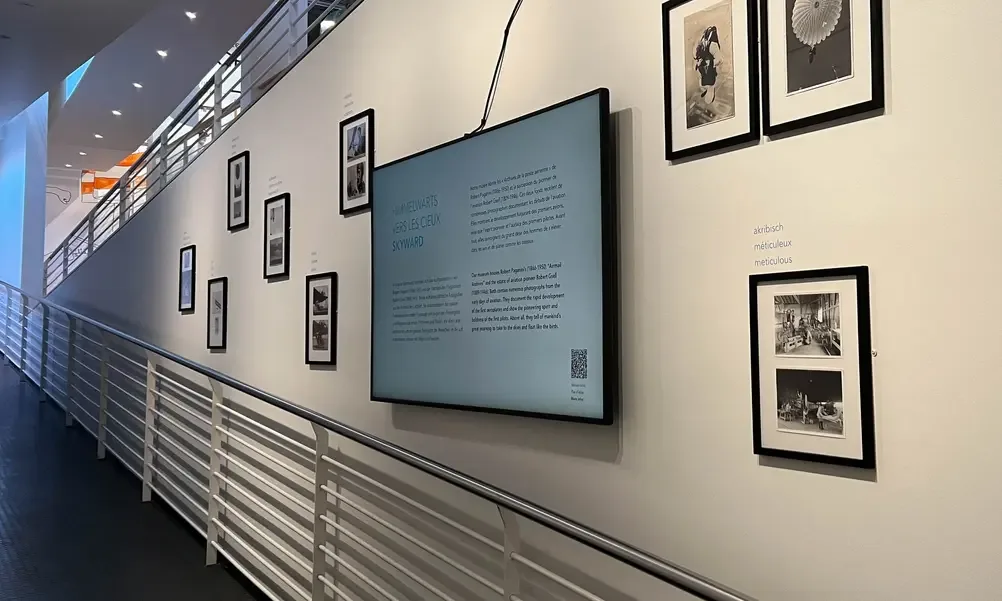
Start with the visitor decision or interpretive task. Entrance information, lobby orientation, object interpretation, interactive discovery and digital art need different display and system boundaries.
The images on this page are official product or application references. They are not presented as verified museum customer case studies.
Outdoor visitor information must follow the actual sunlight, weather, public contact, foundation, cable route and service conditions. A protected lobby display should not be assumed suitable outdoors.
Map each visitor zone to a hardware starting point, then confirm the environment, content source and responsibility boundary.
| Visitor zone | Typical purpose | Hardware starting point | Primary project question |
|---|---|---|---|
| Entrance | Opening information, notices, ticketing direction | Floor-standing or wall display | Arrival sightline and queue clearance |
| Lobby | Orientation, maps and current programmes | Interactive kiosk or information totem | Decision point, stopping space and map ownership |
| Gallery | Object interpretation and multilingual media | Wall-mounted or freestanding display | Viewing distance, light and heritage restrictions |
| Learning area | Interactive exploration and educational media | Touch kiosk or interactive display | Application, accessibility and peripheral scope |
| Digital art zone | Single or multi-screen artwork | Commercial display or LCD video wall | Artwork format, playback, sync and acceptance |
| Outdoor approach | Arrival guidance and venue information | Outdoor wall display or kiosk | Sun, weather, structure and local approval |
“Museum” does not describe one lighting, structure or exposure condition. The platform must follow the actual gallery, atrium, heritage or outdoor position.
Review exhibit lighting, reflection, wall structure, visitor distance, silent operation and service access.
Review daylight direction, glass, reflections, heat, viewing angle and operating schedule.
Review permitted fixing points, cable routes, reversibility, ventilation and approval responsibility.
Review indirect weather, humidity, solar load, public contact and the boundary from direct exposure.
Review sunlight, climate, enclosure, glass, thermal method, cable entry, foundation and local approval.
These are planning categories. Final size, brightness, touch, protection, operating system and interface combinations depend on the selected platform and confirmed configuration.
For object context, timelines and multilingual media. Review wall structure, orientation, inputs and service access.
Explore indoor displaysFor entrances, lobbies and temporary exhibition communication. Review stability, circulation clearance and content source.
Explore floor-standing displaysFor maps and visitor discovery supported by client software. Review touch, OS, accessibility, peripherals and map ownership.
Explore kiosk hardwareFor large-format visual presentation and selected multi-screen art. Review layout, bezel, controller, signal path and maintenance clearance.
Explore LCD video wallsFor constrained architectural positions or directional information. Confirm content canvas, resolution, mounting and actual viewing conditions.
Review an ultra-wide display exampleFor exterior arrivals and cultural plazas. Review weather, sunlight, enclosure, cooling, foundation and public contact.
Explore outdoor displaysA map can be technically visible yet still fail if it appears after the route decision, is too small at approach distance or forces visitors to stop in the circulation path.
Identify where the visitor first approaches and what is visible from that direction.
Place information before the route divides, not after the turn.
Set type size, map detail and screen size from the expected approach and dwell distance.
Allow reading and touch interaction without blocking accessible circulation.
Repeat key route information where visitors need reassurance.
Digital wayfinding supplements rather than automatically replaces required physical, emergency, accessibility or statutory signage.
The display is one layer of the installation. Define how the artwork is produced, played, synchronized, heard, maintained and accepted before freezing the screen configuration.
Single or multi-screen composition, orientation, native resolution, aspect ratio, color and brightness intent.
Player or media server, codec, synchronization, signal distance, network, audio and start-up behavior.
Dark-room thermal conditions, ambient light, service access, curator review and an agreed acceptance method.
Scope boundary: Artwork creation, content rights, media-server programming, audio design and curatorial approval are separate unless explicitly included in the approved project scope.
Separate the visible display from the applications, data and content behind it. This prevents a hardware quotation from being mistaken for a complete visitor-experience platform.
Commercial LCD, touch layer, enclosure, mounting and quoted environmental or appearance options.
Computing, signal interfaces and selected peripheral hardware only when listed in the approved configuration.
Applications, databases, route logic, content, media-server programming, integrations, cybersecurity and ongoing software support.
Scope boundary: A display may present a compatible museum-system output, but compatibility does not mean the wayfinding application, CMS licence, collections database, ticketing system, interactive content or integration is included.
The approved configuration should follow a connected chain of visitor, venue, media and interface decisions—not a screen-size choice made in isolation.
Arrival, orientation, interpretation, interaction, digital art or exterior guidance.
Direction, interpretation, programme information, interaction or artwork.
Distance, direction, dwell time, light, reflection and required type size.
Heritage fabric, structure, circulation, accessibility, weather and service access.
Content canvas, player, OS, resolution, signals, sync, audio and peripherals.
Drawing, content test, curator review, installation approval and maintenance owner.
Protection ratings, certifications, color expectations and operating conditions must be confirmed against the selected model, configuration, target market and supporting documentation.
Suitability claims should be tied to the exact model, configuration, venue position and supporting record.
Identify the base platform, panel, electronics, enclosure, touch, interfaces and optional modules.
Define sightlines, light, reflection, temperature, public contact, mounting, heritage and service conditions.
Confirm which reports, ratings, inspection records and content tests apply to the proposed configuration.
Review quality evaluationA clearer venue brief reduces assumptions and helps engineering compare suitable display platforms.
Venue type, visitor zone and intended task
Information, video, interactive media or artwork format
Site photos, drawings and available dimensions
Viewing distance, visitor flow and stopping area
Ambient light, reflections and environmental exposure
Content source, player, OS, signals and interfaces
Touch, accessibility, peripherals and mounting limits
Quantity, delivery region and expected schedule
Define the zone, audience, decision or interpretive task.
Confirm sightline, ambient light, structure, circulation and exposure.
Compare wall, floor, interactive, multi-screen and outdoor options.
Document the player, software, database, media and integration owners.
Review the proposed configuration, inclusions and open items.
Confirm evaluation, acceptance and production arrangements.
Use live first-party resources for placement, installation, content-system planning, configuration evidence and customization boundaries.
Review how interactive kiosks are used across information and self-service settings, then define the museum-specific visitor task separately.
Review interactive kiosk applicationsUse the planning questions as a starting point for content, location, maintenance and project-scope discussions.
Review planning questionsUse this guide to separate display hardware from player, CMS, hosting, workflow and support decisions.
Read the CMS planning guideStart with the proposed model, configuration, environment, target market and required supporting records.
Review quality evaluationReview enclosure, appearance, brightness, interfaces, electronics, cooling, mounting and peripheral options.
Review OEM/ODM scopeProvide the venue type, visitor zone, intended information or media, site photos or drawings, available dimensions, viewing distance, ambient light, mounting conditions, content source, player or OS, interfaces, touch or peripheral needs, quantity, delivery region and expected schedule.
The choice depends on the visitor task, sightline, viewing distance, ambient light, mounting restrictions, content format, service access and visual impact. A lobby directory, object-interpretation display and digital-art installation should not inherit one specification.
Uniview LCD can review configurable display, touch, enclosure, player, interface and peripheral hardware. The wayfinding application, map database, route logic and ongoing content management require a separately confirmed software scope.
Not by default. Map design, route logic, multilingual content, application development, hosting, analytics and updates are separate unless explicitly listed in an approved project scope.
A selected player or display may connect to a compatible output after technical review, but CMS licences, collections databases, ticketing systems, integrations, cybersecurity and ongoing software support are not automatically included.
Potentially, but suitability depends on the artwork format, aspect ratio, resolution, color and brightness requirements, signal path, playback hardware, synchronization, audio, thermal conditions and acceptance method. Content creation and art rights remain separate.
Synchronization can be reviewed after the content format, player or media server, signal distribution, network conditions and tolerance are defined. No synchronization performance should be assumed without a confirmed configuration and test method.
Confirm wall and floor restrictions, permitted fixing points, cable routes, power, ventilation, reversibility, visual impact, service access and the approval authority. The display supplier should not assume permission to alter protected fabric.
A drawing, configuration review or sample route can be discussed after the project requirements are defined. Commercial terms, acceptance criteria and production arrangements are confirmed per project.
Lead time is confirmed after the display platform, enclosure, electronics, interfaces, optional modules, quantity, artwork requirements and approval process are frozen.
Share the visitor zone, site conditions, drawings, viewing distance, media format, system boundary and quantity. Uniview LCD can review a suitable hardware direction and identify the items requiring further confirmation.